
Hydrogen Piping Flanges: Materials, Sealing, Pressure & Selection Guide
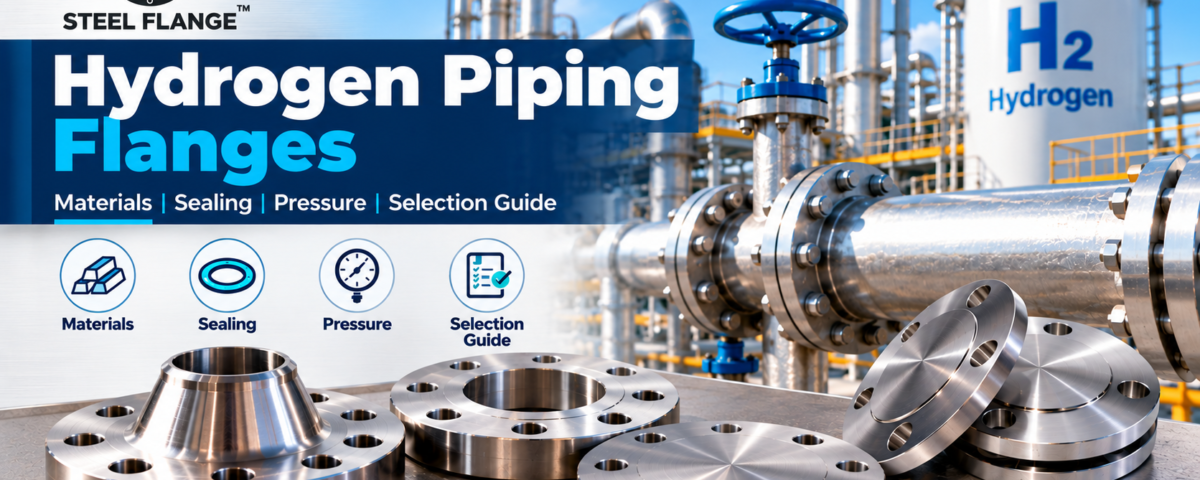
Hydrogen Piping Flanges: Materials, Sealing, Pressure & Selection Guide
The global hydrogen industry is developing rapidly, with hydrogen being explored and deployed across refining, chemical processing, energy, transportation, power generation and industrial applications. As hydrogen infrastructure expands, the demand for reliable piping components designed for demanding service conditions is also increasing.
Flanges are an important part of these systems. They provide detachable connections between pipes, valves, pumps, vessels and other equipment, allowing piping systems to be assembled, inspected, maintained and modified.
However, selecting a flange for hydrogen piping requires more than choosing a flange based only on size and pressure class. Material compatibility, sealing performance, pressure and temperature, flange design, bolting, manufacturing quality, inspection and applicable standards all need to be considered together.
This guide explains the key factors engineers, EPC contractors and procurement teams should consider when selecting flanges for hydrogen piping applications.
What Are Hydrogen Piping Flanges?
Hydrogen piping flanges are mechanical components used to create bolted connections between sections of hydrogen piping and associated equipment.
Depending on the application, flanges can be used to connect:
- Pipes
- Valves
- Pumps
- Pressure vessels
- Heat exchangers
- Instruments
- Other piping components
The flange itself is only one part of the complete connection. The performance of a flanged joint also depends on the gasket, bolting, flange facing, machining quality and installation procedure.
For hydrogen service, these factors become particularly important because reliable containment and leakage control are essential.
Why Does Hydrogen Piping Require Special Consideration?
Hydrogen has physical and chemical characteristics that require careful consideration during piping-system design.
One important issue is material compatibility. Under certain conditions, hydrogen can contribute to material degradation mechanisms such as hydrogen embrittlement. Hydrogen can also create challenges related to leakage and permeation.
The U.S. Department of Energy identifies material compatibility, embrittlement and leakage among the technical considerations associated with hydrogen transportation infrastructure.
This means that a flange suitable for conventional industrial service should not automatically be assumed to be suitable for every hydrogen application.
The complete service conditions must be evaluated.
What Makes a Flange Suitable for Hydrogen Service?
There is no single flange material or flange type that is suitable for every hydrogen application.
Selection should consider:
- Hydrogen pressure
- Operating and design temperature
- Gaseous or liquid hydrogen service
- Hydrogen concentration and purity
- Pipe size
- Pressure cycling
- Material compatibility
- Flange configuration
- Flange facing
- Gasket material
- Bolting
- Applicable design code
- Inspection requirements
- Project specifications
ASME B31.12 is specifically dedicated to hydrogen piping and pipelines and addresses areas including materials, components, design, fabrication, assembly, inspection, examination and testing.
Therefore, hydrogen flange selection should always be based on the complete engineering specification rather than on one parameter alone.
Material Selection for Hydrogen Flanges
https://steelflangemfg.com/flanges-2/
Material selection is one of the most important considerations when sourcing flanges for hydrogen service.
Stainless Steel Flanges
Stainless steel is widely used in demanding industrial applications because of its corrosion resistance and mechanical properties.
Grades such as 304L and 316L may be considered for particular hydrogen applications, depending on operating conditions, pressure, temperature and applicable material requirements.
However, material selection should not be based simply on the fact that a material is stainless steel. Hydrogen compatibility must be evaluated for the specific application.
Carbon Steel Flanges
Carbon steel can be used in certain hydrogen piping applications when the material grade and service conditions meet the applicable requirements.
The selection should consider the specific hydrogen environment, pressure, temperature, design code and material requirements.
A carbon steel grade commonly used in conventional oil and gas service should not automatically be considered suitable for every hydrogen application.
Duplex and Super Duplex Flanges
Duplex and super duplex stainless steels combine high strength with excellent corrosion resistance and are widely used in demanding applications including offshore, marine, chemical and process industries.
They may be considered for specialized hydrogen applications where their properties align with the project requirements.
However, the final material selection should always be based on application-specific engineering evaluation and applicable standards.
Nickel Alloy Flanges
Nickel-based alloys can be used in specialized environments where high corrosion resistance, temperature performance or other material characteristics are required.
As with other materials, their suitability for hydrogen service should be established based on the actual operating conditions and applicable specifications.
Types of Flanges Used in Hydrogen Piping
Different flange designs may be used depending on pipe size, pressure, temperature, connection requirements and system design.
Weld Neck Flanges
Weld Neck Flanges are commonly selected for demanding piping applications because of their robust design and gradual transition between the pipe and flange.
They are frequently considered for high-pressure and high-temperature piping systems where mechanical integrity and resistance to cyclic loading are important.
Blind Flanges
Blind Flanges are used to close the end of a pipe, valve, pressure vessel or other piping component.
They may be used for isolation, maintenance or future system expansion, subject to the piping design and applicable pressure requirements.
Slip-On Flanges
Slip-On Flanges are used in suitable piping applications where their design and connection method meet the requirements of the system.
Their suitability for hydrogen service must be evaluated according to the applicable code and project specification.
Socket Weld Flanges
Socket Weld Flanges are generally used in smaller-diameter piping applications where a socket-welded connection is specified.
They can provide a compact connection arrangement for suitable applications.
RTJ Flanges
Ring Type Joint (RTJ) Flanges use a specially machined groove and metal ring gasket to create the sealing connection.
They are commonly associated with high-pressure applications where the applicable piping specification requires an RTJ connection.
Sealing: A Critical Factor in Hydrogen Flange Connections
A flange connection is only as reliable as its sealing system.
Hydrogen leakage prevention is an important consideration because of hydrogen’s physical characteristics. The gasket, flange facing, bolting and assembly procedure all contribute to the integrity of the joint.
Important factors include:
- Gasket material
- Gasket compatibility
- Flange facing
- Surface finish
- Gasket seating load
- Bolt preload
- Temperature
- Pressure
- Thermal cycling
- Installation procedure
Historical hydrogen piping guidance has also highlighted the relationship between gasket performance, flange surface finish, bolting and pressure-tight sealing.
For this reason, gasket selection should be considered as part of the complete flange-joint design.
Why Flange Surface Finish Matters
The sealing face of a flange plays an important role in gasket performance.
A flange may have the correct dimensions and material but still require attention to:
- Surface finish
- Flatness
- Facing condition
- Machining quality
- Damage during transportation
- Cleanliness before assembly
Poor surface condition can affect gasket seating and potentially compromise the intended sealing performance.
This makes controlled machining and inspection important during flange manufacturing.
Bolting Considerations for Hydrogen Flanges
Bolting is another critical part of the flange connection.
Bolts must provide adequate clamping force to maintain the intended joint integrity while remaining compatible with the service conditions.
Depending on the project, engineers may need to evaluate:
- Bolt material
- Strength
- Temperature
- Hydrogen compatibility
- Required preload
- Tightening method
- Torque requirements
- Pressure and thermal cycling
The flange, gasket and bolts should therefore be considered as a complete engineered joint.
High-Pressure Hydrogen Flanges
Hydrogen infrastructure can involve demanding pressure conditions, particularly in storage, transportation and industrial processing applications.
When selecting high-pressure hydrogen flanges, engineers should consider:
Design Pressure
The flange must be suitable for the specified design pressure and applicable pressure-temperature conditions.
Temperature
Minimum and maximum operating temperatures can affect material properties, gasket performance and bolting requirements.
Pressure Cycling
Repeated pressurization and depressurization can place additional demands on piping components and connections.
Material Compatibility
The selected material must be appropriate for the hydrogen environment and specified service conditions.
Sealing Performance
Gasket, flange facing and bolting selection should be evaluated together to achieve reliable joint performance.
Applicable Code
The piping system must be designed and manufactured according to the applicable code and project specification.
A flange’s pressure class alone should therefore not be treated as proof that it is suitable for a particular hydrogen application.
ASME B31.12 and Hydrogen Piping
ASME B31.12 is one of the key standards for hydrogen piping and pipelines.
ASME states that the code covers piping and pipelines for gaseous hydrogen and gaseous hydrogen mixtures, as well as piping in liquid hydrogen service. Its requirements address areas such as materials, components, design, fabrication, assembly, inspection, examination and testing.
This makes ASME B31.12 an important reference for engineers and project teams working on hydrogen piping systems.
However, other standards may also apply depending on the component, application, country and project requirements.
For example, flange dimensional requirements may be specified through an applicable flange standard, while the overall piping system may be governed by a separate piping design code.
The distinction is important:
A flange manufactured according to a dimensional standard is not automatically suitable for every hydrogen application.
Material, design conditions, sealing system and applicable engineering requirements must also be considered.
Inspection and Quality Control for Hydrogen Flanges
Quality control is particularly important for components used in critical piping systems.
Depending on the project specification, inspection can include:
Material Verification
The supplied material should match the specified grade and relevant material documentation.
Heat-number traceability can help maintain control from raw material through finished product.
Dimensional Inspection
Critical dimensions may include:
- Outside diameter
- Inside diameter
- Thickness
- Bolt-hole diameter
- Bolt-hole pitch circle
- Number of bolt holes
- Flange height
- Facing dimensions
Surface Inspection
The flange face should be checked for machining defects, damage or other conditions that could affect the sealing connection.
Non-Destructive Examination
NDE requirements depend on the applicable code, material, manufacturing process and project specification.
Material Documentation
Depending on customer requirements, documentation may include material certificates, inspection reports, dimensional reports and other quality records.
For critical applications, documentation and traceability should be defined before manufacturing begins.
Common Mistakes When Selecting Hydrogen Flanges
1. Selecting Only by Pressure Class
A Class 600, 900 or higher-rated flange should not be selected simply because the application involves high pressure.
Material, temperature, design conditions and sealing requirements also matter.
2. Assuming Conventional Flanges Are Automatically Suitable
Experience in conventional oil and gas service does not automatically establish suitability for hydrogen service.
Hydrogen-specific considerations must be evaluated.
3. Ignoring the Gasket
The gasket is a critical part of the flange connection.
Its material, compatibility, seating requirements and operating conditions need to be considered.
4. Ignoring Bolting
Bolting affects the clamping force and integrity of the joint.
It should be selected according to the applicable engineering requirements.
5. Focusing Only on Material Grade
Selecting 316L, duplex or another material does not by itself guarantee suitability for hydrogen service.
The complete application must be evaluated.
6. Treating Inspection as an Afterthought
For critical applications, inspection and documentation requirements should be established before manufacturing begins.
How to Select the Right Hydrogen Flange
Before requesting a quotation from a flange manufacturer, buyers should ideally provide the following information:
1. Application
Where will the flange be installed?
2. Hydrogen Service
Gaseous or liquid hydrogen? What are the relevant service conditions?
3. Pressure
What are the operating and design pressures?
4. Temperature
What are the minimum and maximum operating temperatures?
5. Material
Which material grades are specified or approved?
6. Standard
Which flange and piping standards apply?
7. Size
Nominal pipe size and schedule/wall thickness.
8. Flange Type
Weld Neck, Blind, Slip-On, Socket Weld, RTJ or another configuration.
9. Facing
Raised Face, RTJ or another specified facing.
10. Inspection Requirements
PMI, NDE, dimensional inspection, testing and documentation as applicable.
11. Drawing or Project Specification
Providing a technical drawing or complete project specification can significantly reduce the risk of misunderstanding.
Why Manufacturing Quality Matters
For hydrogen applications, manufacturing quality is closely connected with component reliability.
A capable flange manufacturer should be able to control important stages of production, including:
- Raw material selection
- Material traceability
- Forging
- Heat treatment
- Machining
- Drilling
- Facing
- Dimensional inspection
- Surface inspection
- Final quality control
- Documentation
Consistent manufacturing processes help ensure that the finished flange meets the specified dimensional, material and quality requirements.
Steel Flange MFG. Co. – Engineered Flanges for Demanding Applications
Steel Flange MFG. Co. is an Indian manufacturer and exporter of industrial flanges, forgings, rings and machined components.
Our product range includes:
- Stainless Steel Flanges
- Carbon Steel Flanges
- Duplex Flanges
- Super Duplex Flanges
- Nickel Alloy Flanges
- Forged Rings
- Forgings
- Machined Components
We manufacture products in different sizes, pressure classes, standards and configurations according to customer requirements.
Our capabilities also include customized manufacturing based on customer drawings and project specifications.
For demanding industrial applications, material traceability, dimensional accuracy, controlled machining and appropriate quality documentation are important parts of the manufacturing process.
For hydrogen-related applications, we work according to the specific material, dimensional, pressure, inspection and documentation requirements provided by the customer and applicable project specifications.
Conclusion
Hydrogen is becoming an increasingly important part of the future energy and industrial landscape, creating new requirements for reliable piping infrastructure.
Flanges play an essential role in these systems by providing detachable connections between piping components and equipment.
However, selecting a flange for hydrogen service requires a complete engineering approach.
Material compatibility, pressure, temperature, flange type, sealing, bolting, surface finish, manufacturing quality, inspection and applicable standards should all be considered before final selection.
ASME B31.12 provides a dedicated framework for hydrogen piping and pipelines, while applicable component standards and project specifications define additional requirements.
For buyers, EPC contractors and engineering companies sourcing hydrogen piping components, choosing an experienced manufacturer and providing a clear technical specification can help ensure the right product is manufactured for the intended application.
Looking for flanges for hydrogen piping, high-pressure systems or other critical industrial applications? Contact Steel Flange MFG. Co. with your size, material, pressure class, standard or drawing requirements.
Frequently Asked Questions
Which standard is used for hydrogen piping?
ASME B31.12 is a key standard for hydrogen piping and pipelines, covering gaseous hydrogen, gaseous hydrogen mixtures and liquid hydrogen piping within its scope. Other standards may apply depending on the project and component.
Can stainless steel flanges be used for hydrogen?
Certain stainless steel grades may be suitable for specific hydrogen applications. The correct selection depends on hydrogen conditions, pressure, temperature, material requirements and applicable codes.
Are standard ASME flanges automatically suitable for hydrogen?
No. A flange manufactured according to a dimensional standard is not automatically suitable for every hydrogen application. Material compatibility, design conditions, sealing, bolting and applicable piping requirements must also be evaluated.
Why is sealing important in hydrogen piping?
Reliable sealing is important for controlling leakage. Flange facing, gasket selection, bolting, surface finish and assembly procedures all contribute to the integrity of a flange connection.
What information should I provide when ordering hydrogen flanges?
Provide the flange type, size, material, pressure class, standard, facing, operating pressure and temperature, hydrogen service conditions, inspection requirements and any available drawing or project specification.
Can Steel Flange MFG. Co. manufacture customized flanges?
Yes. Steel Flange MFG. Co. can manufacture industrial flanges and machined components according to applicable standards, customer drawings and project-specific requirements.