
Steel Flange Forging Process: Hot Forging Method Explained
Steel Flange Forging Process: Hot Forging Method Explained
The steel flange manufacturing process plays a critical role in determining the strength, reliability, and performance of piping systems used in industrial applications. Among various manufacturing methods, the hot forging process is widely preferred for producing forged steel flanges that can withstand high pressure and temperature conditions.
This blog explains the hot forging process for steel flange manufacturing, its working principle, benefits, and industrial applications.
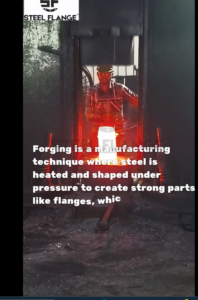
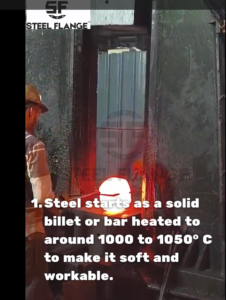

Steel Flange Manufacturing Process Using Hot Forging
The steel flange manufacturing process involves shaping raw steel into flanges that are used to connect pipes, valves, pumps, and other equipment.
When strength, durability, and safety are critical, manufacturers rely on the hot forging process to produce high-performance forged steel flanges.
Hot Forging Process in Steel Flange Manufacturing
The hot forging process involves heating steel billets to a high temperature (generally above 1000°C) and shaping them under heavy mechanical pressure using forging hammers or presses.

Steel flange manufacturing: forging, heat treatment, and rolling.
https://steelflangemfg.com/flange-manufacturing-process/
At this temperature, steel becomes ductile and can be formed easily. During forging, the metal grain flows in the direction of the shape, resulting in hot forged steel flanges with superior mechanical properties.
Heating of Steel Billets
Steel billets are heated in a controlled furnace until they reach the required forging temperature. Proper heating is essential to achieve uniform deformation during forging.
Hot Forging Under High Pressure
The heated billet is placed under a forging hammer or press and shaped into the flange form. High pressure ensures proper compaction of the metal and eliminates internal voids.
Grain Structure Improvement
During hot forging, the grain structure aligns naturally with the shape of the flange. This improves:
-
Strength
-
Toughness
-
Pressure resistance
-
Overall durability
Benefits of Hot Forged Steel Flanges
Hot forged steel flanges offer several advantages compared to other manufacturing methods:
-
High mechanical strength
-
Improved grain structure
-
Better resistance to pressure and temperature
-
Reduced risk of internal defects
-
Longer service life
Because of these benefits, forged steel flanges are widely used in demanding industrial environments.
Applications of Hot Forged Steel Flanges
Hot forged steel flanges are commonly used in:
-
Oil & Gas pipelines
-
Petrochemical industries
-
Power plants
-
EPC and infrastructure projects
-
Heavy engineering industries
These sectors require high-pressure steel flanges that perform reliably under extreme operating conditions.
Why Hot Forging Is Preferred in Steel Flange Manufacturing
The hot forging process produces flanges with consistent quality, higher strength, and better performance.
For applications where safety and reliability are critical, hot forged steel flanges remain the preferred choice.
Conclusion
The steel flange manufacturing process using hot forging ensures the production of flanges that meet high standards of strength, durability, and pressure resistance.
By focusing on controlled heating, precise forging, and strict quality inspection, manufacturers deliver forged steel flanges suitable for critical industrial applications.
Frequently Asked Questions (FAQs)
What is the hot forging process in steel flange manufacturing?
The hot forging process involves heating steel billets to high temperatures and shaping them under heavy pressure to produce strong and durable forged steel flanges.
Why are forged steel flanges used for high-pressure applications?
Forged steel flanges have improved grain structure and higher mechanical strength, making them suitable for high-pressure and high-temperature environments.
Which industries use hot forged steel flanges?
Oil & gas, petrochemical, power generation, EPC, pipeline, and heavy engineering industries commonly use hot forged steel flanges.
What temperature is used in hot forging steel flanges?
Steel billets are generally heated above 1000°C during the hot forging process.
Is hot forging suitable for industrial steel flange manufacturing?
Yes, hot forging is one of the most reliable methods for manufacturing industrial steel flanges due to its strength and durability.